Mauricio Pochettino to Manchester United Signals the Right Appointment at the Right Moment
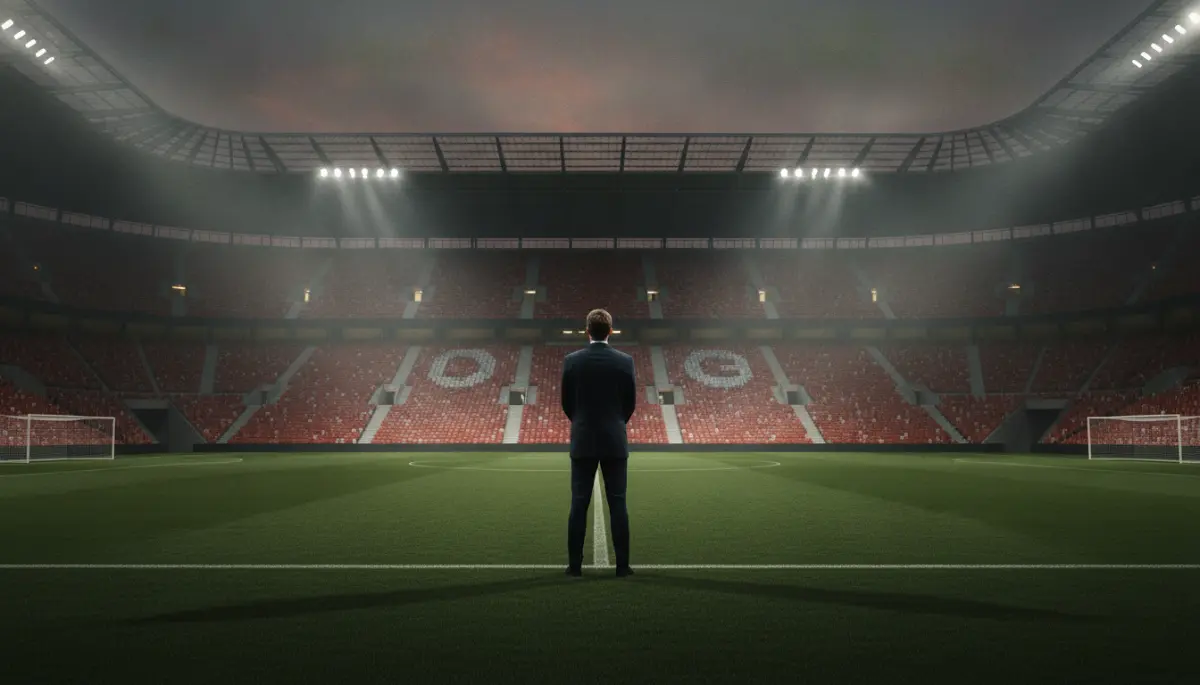
A pursuit that has quietly simmered for roughly a decade is finally reaching its conclusion. Mauricio Pochettino is set to become the next manager of Manchester United, and the timing, the fit, and the history behind the move all point to an appointment that makes sense on several levels.
Pochettino himself once acknowledged United’s long-running interest while noting that the right conditions had never aligned. Now, after years of near-misses, the circumstances have finally come together.
How the Decision Unfolded
Manchester United informed Michael Carrick of his dismissal on Thursday. The club was clear in expressing gratitude for Carrick’s contribution during his interim spell, a stretch in which he guided the side to 12 wins from 17 matches last season and steered the club back into the Champions League.
Despite that, a review of the head coach position concluded that a disappointing start to the 2026 to 27 campaign required a change in direction. United, a squad widely regarded as stronger than its 18th place standing in the Premier League, needed fresh leadership from a different kind of candidate.
Pochettino was approached before Carrick’s exit was confirmed, a move seemingly designed to ensure the club would not be left without a leader for any meaningful stretch.
A Proven Record Across Europe’s Top Clubs
The Argentine arrives with a résumé built on steady progress and notable peaks:
- He made an early impression in England with Southampton
- At Tottenham Hotspur, he delivered three consecutive top-three finishes, including the club’s strongest league result in 54 years and its only Champions League final appearance
- His spell at Paris Saint-Germain proved difficult, as he grappled with a superstar culture later identified as a drag on the club
- A frustrating season at Chelsea saw him clash with the sporting hierarchy at Stamford Bridge
That Chelsea experience likely shaped his thinking when weighing the United offer, pushing him to confirm he would be entering a structure he believes he can work within and succeed in. By all appearances, he is satisfied with what he found.
His most recent role came with the United States men’s national team, which he joined in 2024. The home World Cup last summer did not meet expectations, yet U.S. Soccer had seen enough to extend his influence well beyond the senior squad, bringing him into strategy and long-term development across the wider game.
A Personal Bond With United’s Greatest Manager
Few connections carry more weight at Old Trafford than one to Sir Alex Ferguson, and Pochettino has cultivated exactly that.
The parallels are hard to overlook. When Ferguson arrived from Aberdeen in November 1986, United sat 19th out of 22 in the standings. Pochettino now inherits a team that had slipped into the relegation zone before the international break, four decades almost to the month after Ferguson first walked through the door.
The two have dined together, around 2016, when Pochettino was first strongly linked with the role, and Ferguson has since shared his experience with the admiring Argentine. In Guillem Balague’s 2017 book Brave New World, Pochettino recalled Ferguson explaining how he rebuilt United around his own philosophy, enduring finishes of 11th, 13th, and sixth before the titles arrived. Speaking later to Sky Sports, Pochettino praised Ferguson’s grasp of the human side of management as central to his sustained success.
A Style Built for the United Way
United demand a particular brand of football, the kind captured in the 2021 documentary that traced the club’s identity from the Busby Babes through to the 1999 treble. Supporters want intensity, pace, and flair underpinned by physicality and determination.
Pochettino’s coaching draws heavily on Marcelo Bielsa, the man he calls his football father, having played under him at Newell’s Old Boys, Espanyol, and with Argentina. United supporters may remember Bielsa’s Athletic Club side winning 3 to 2 at Old Trafford in 2012, a result kept respectable only by several strong David de Gea saves. That pressing, transition-heavy, attacking approach sits at the heart of Pochettino’s methods and echoes United’s historic style.
A Manager Who Trusts Youth
Developing young players is woven into United’s DNA, dating back to the creation of its junior division in 1937. Carrick embraced that tradition, revitalizing Kobbie Mainoo and handing opportunities to Shea Lacey.
Pochettino shares that instinct. During the opening international break of this season, he named 11 uncapped players aged 20 or younger on his USMNT roster, eight of them teenagers, signaling his willingness to back talent over reputation.
United’s squad offers plenty of raw material for that approach, including Leny Yoro, Ayden Heaven, and Mainoo, alongside 22-year-olds Carlos Baleba, Patrick Dorgu, and Andrey Santos. Goalkeeper Senne Lammens is 24, still young for the position, while Amad Diallo turns 25 next year with room to grow.
What His Former Players Say
The testimonials speak volumes. Harry Kane, the 2026 Ballon d’Or winner, had managed just five goals in 26 Tottenham appearances before Pochettino arrived in 2014. The manager’s faith helped Kane finish that season with 31 goals, transforming his physical conditioning and sharpening his movement around the box. Kane later described him as the perfect manager for that stage of his career.
Others echo the sentiment. Son Heung-min credits Pochettino with making him the player he became. Lionel Messi cited his presence as a factor in joining PSG in 2021, PSG captain Marquinhos called him an exceptional coach, and former Spurs full-back Kyle Walker highlighted his man-management instincts.
For a club searching for identity and direction, Pochettino offers a rare blend of pedigree, philosophy, and genuine affinity for what Manchester United is meant to represent.
Keep reading

England Beat Spain 3-2 in Madrid to End 43-Match Unbeaten Run
England beat Spain 3-2 in Madrid on Sunday night, ending the world champions’ 43-match unbeaten run and finishing top of Nations League Group A3. Harry Kane, Ezri Konsa and Ben White put Thomas Tuchel’s side 3-0 up by the 57th minute. A red card for Elliot Anderson then left England defending with ten men for

Cricket Scotland Refuses Afghanistan Bilaterals
That’s a big call, and it’s not about cricket alone. The board says the decision is tied to the Taliban government’s treatment of women and girls in Afghanistan. Scotland will still play Afghanistan in ICC events if the fixture is scheduled, but outside that? No chance. Scotland says no — but only outside ICC events

Tobique License Gains Ground as a Curaçao Alternative
The gambling industry’s long reliance on Curaçao as its default licensing hub is unwinding. After decades as the cheap, fast, low-friction entry point for operators worldwide, Curaçao overhauled its entire framework with the National Ordinance on Games of Chance (LOK), first introduced in September 2023 and now fully in force. The new rules demand a